

What the Process IncludesAssesment & Stabilization

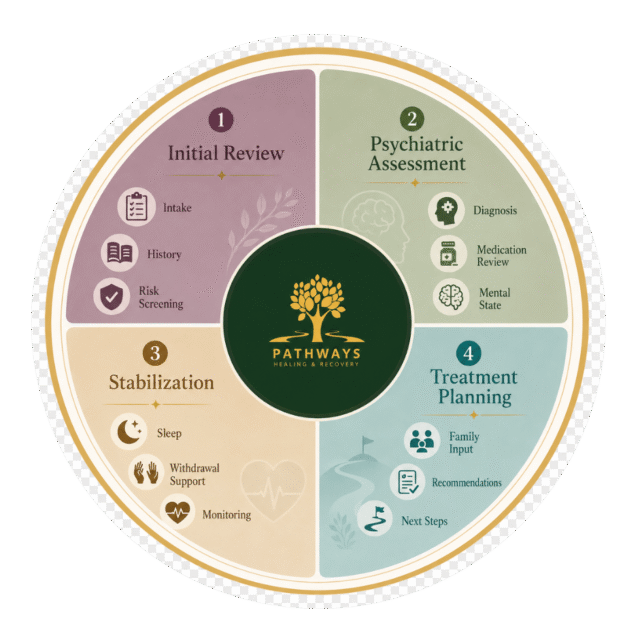
The Assessment & Stabilisation process begins with a confidential clinical review, followed by psychiatrist-led assessment, medication and withdrawal-risk evaluation, psychological screening where needed, and family consultation where appropriate. Based on this, the Pathways team develops a personalised stabilisation and treatment plan, which may include detox, residential care, dual diagnosis treatment, outpatient follow-up, therapy, family work, nutrition support, wellness interventions, or aftercare planning.
https://pathways.living/rehab/wp-content/uploads/sites/3/2026/06/Untitled-design-52-640x640.png

Typical Programme Pathway

bt_bb_section_bottom_section_coverage_image
https://pathways.living/rehab/wp-content/uploads/sites/3/2026/06/ChatGPT-Image-Jun-21-2026-01_38_24-PM.webp

Day 1Admission, Safety & Clinical Assessment

The first day is focused on understanding the situation clearly and making the client feel safe.

This may include:

  • Psychiatric assessment
  • Medical and medication review
  • Substance use and withdrawal risk assessment
  • Mental health screening
  • Sleep, anxiety, mood, and behavioural assessment
  • Initial family discussion where appropriate
  • Immediate stabilisation plan

A nutritional intake is also completed early in the process so we can understand appetite, digestion, sleep patterns, weight changes, cravings, deficiencies, food preferences, and any medical or psychological needs related to diet.

Days 2–3Stabilisation, Rest & Nutrition Support

Once the initial assessment is complete, the focus shifts toward stabilisation.

This phase may include:

  • Withdrawal monitoring where required
  • Medication-assisted symptom management where clinically appropriate
  • Sleep support
  • Hydration and recovery nutrition
  • Gentle routine building
  • Emotional support
  • Reduced stimulation and rest
  • Light movement where suitable

Clients begin receiving customised meals based on their needs, preferences, and recovery goals. The aim is to support the body during early stabilisation with nourishing, seasonal, easy-to-digest food that helps restore energy, sleep, mood, and physical wellbeing.


https://pathways.living/rehab/wp-content/uploads/sites/3/2026/06/ChatGPT-Image-Jun-21-2026-02_09_58-PM.webp
https://pathways.living/rehab/wp-content/uploads/sites/3/2026/06/ChatGPT-Image-Jun-21-2026-02_31_07-PM.webp

Days 7–10Treatment Direction & Recovery Planning

By the final stage of the programme, the clinical picture is clearer.

The team reviews:

  • Diagnosis and psychiatric needs
  • Detox or stabilisation progress
  • Psychological findings
  • Nutrition and lifestyle needs
  • Family concerns
  • Relapse risks
  • Motivation for treatment
  • Recommended level of care

A personalised plan is then developed. This may include continuing into a residential programme, entering a dual diagnosis track, beginning outpatient care, continuing therapy, involving the family more deeply, or developing an aftercare plan.

The goal is that the client and family leave this phase with clarity — not confusion.

GET IN TOUCH

Begin With Clarity

You do not need to know exactly what treatment is required before contacting us. That is what assessment is for.
At Pathways, we help individuals and families understand the situation, stabilise immediate concerns, and choose the most appropriate next step with confidence.
bt_bb_section_bottom_section_coverage_image
https://pathways.living/rehab/wp-content/uploads/sites/3/2022/01/Tablet.png
GETTING STARTED

A Gift For You

    Get practices, tips, and special offers delivered straight to your inbox.